
AI Filmmaking Services for Brands Across India
Webcomp Digitex built its own AI filmmaking pipeline in Pune and runs it for brands across India's major metros, without the shoot-day logistics a full camera crew would add to the invoice.
What you actually get
Production costs that skip a crew's travel line items
A camera-crew shoot in India usually carries its own logistics bill — travel between cities, equipment freight, location fees, a day rate for every crew member on set. AI-assisted rough assembly and voiceover generation remove most of that structure, so a brand in Mumbai or Bengaluru isn't paying to fly a crew to Pune or anywhere else. The budget that would have gone toward logistics goes toward more cuts, more formats and more messaging angles from the same source material instead.
Voiceover built for a country that runs on more than one language
A campaign aimed at a national Indian audience rarely works in a single language — Hindi carries one market, Tamil, Telugu, Marathi, Bengali or Kannada carry others, sometimes within the same brand's own customer base. Regional-language voiceover and messaging variants can be generated from the same core footage when scoped upfront, rather than commissioning a separate shoot or waiting on a delayed dub for each market. That keeps a multi-language rollout from turning into a multi-shoot rollout.
Turnarounds built around India's own campaign calendar
Diwali, Republic Day and Independence Day creative, wedding-season promotions, regional festivals like Ganesh Chaturthi, Durga Puja or Pongal — a lot of Indian ad spend clusters into a handful of compressed windows every year, and the brief for each one usually lands late. Because generating a new cut or a new variant doesn't require re-booking a shoot, a festival-specific version can be produced and shipped inside that window instead of missing it while a crew's schedule gets sorted out.
An in-person option most clients don't need, but can use
Because everyone involved is inside the same country and the same working week — Monday to Saturday, 10:00 to 19:00 IST — a brand team based in Delhi, Hyderabad or Chennai can sit in on a colour session or a final review at our Pimple Saudagar setup without treating it as an international trip. Most clients still run the whole project over calls and a shared review link, but the option exists here in a way it simply can't for a client outside the country.
How this actually works
How an India-based AI filmmaking project actually runs, city to city
Webcomp Digitex has run video and AI-assisted production out of Pimple Saudagar, Pune since 2019, incorporated as a Private Limited company in 2024 and recognised as a DPIIT startup, with a 15-member in-house crew handling everything from shooting through the AI-assisted edit to the final human pass. None of that changes when the client sits in Mumbai, Bengaluru, Delhi, Hyderabad or Chennai instead of Pune — the pipeline was built to run without a crew needing to be physically present with the client, the opposite constraint of the studio's separate on-location video production service.
What does change, working inside India, is how tight the loop can be. A brief given in the morning can come back as a rough cut the same working day, since there's no timezone gap to plan a review call around and no international transfer delay on the invoice once a project wraps. That matters most during India's compressed campaign windows — Diwali, the wedding-season stretch, Republic Day creative — where a brand often has days rather than weeks to get a regional-language variant out before the moment passes.
Invoicing is in INR with GST-compliant billing, a fixed quote agreed in writing before work starts, and no currency-conversion step to explain to an accounts team. Business hours run Monday to Saturday, 10:00 to 19:00 IST, and for a brand team that also happens to be in India, a working session at the Pune studio is on the table if it's useful — though the pipeline itself doesn't depend on anyone showing up in person to move a project forward.
Capabilities
- AI-assisted editing
- Regional-language voiceover
- Festival-ready turnarounds
- GST-compliant invoicing
- In-person option for India-based clients
Learn
AI Filmmaking, Explained
What is AI filmmaking, and why does it matter for a Diwali brief?
A festival brief usually lands with no slack in it — a Ganesh Chaturthi campaign confirmed ten days out, a Diwali push that needs a Hindi hero cut plus Tamil, Telugu and Marathi versions before the festival window closes. A normal shoot schedule can't absorb that; booking four regional crews and four regional shoots in ten days isn't realistic at any budget. What makes it realistic instead is that AI filmmaking is a pipeline, not one app: a model generates the visual frames, another handles voice, another motion, sometimes a fourth handles upscaling, and our editors in Pimple Saudagar pull all of that together, correct it and finish it by hand.
That pipeline structure is what turns a five-language national campaign from a five-shoot problem into a five-variant problem inside one production. The underlying visual sequence gets generated once; each language's voice and on-screen text pass is then built from that same base rather than requiring its own set. It doesn't replace a camera crew when a brief genuinely needs real faces and real locations on screen — a Diwali TVC with a recognisable actor still gets shot. It's a different tool for the briefs a shoot budget or a festival calendar would otherwise force a brand to skip.
What does a multi-language, festival-timed video actually cost?
Most AI filmmaking quotes work out somewhere between ₹20,000 and ₹1,00,000+ per finished minute, and for an Indian festival campaign the number that actually decides where you land isn't resolution alone — it's how many language variants you need and how tight the delivery window is before the festival date passes. A single-language, unhurried brief sits near the lower end. A Diwali push needing Hindi, Tamil, Telugu and Marathi cuts, confirmed with days rather than weeks of runway, pushes toward the higher end on both counts at once.
Here's the part that isn't obvious until you've priced one of these: every language pass is its own set of paid, metered calls to a model like Kling or Seedance. Getting a voice and its on-screen timing to sit naturally in Tamil doesn't automatically carry over from a Hindi pass that already worked — it's a fresh generation, and it can take several attempts before one is clean enough to use. Multiply that retry count by four languages and the festival deadline that doesn't allow for a slow second attempt, and that's what's actually sitting inside a higher quote, not padding.
So we don't hand out one flat per-minute figure — every quote is scoped to how many languages, how many cuts and how tight the window is on your specific brief. All quotes are in INR with GST invoiced separately, sized properly before work starts rather than adjusted mid-project once a festival date is already close.
Which formats we lean on for festival and regional campaigns
Most of what we produce for Indian brands clusters around three formats. AI ads carry the bulk of festival work — 15 to 30-second spots built to run as separate Hindi, Tamil, Telugu and Marathi cuts from one production pass rather than one national dub. AI brand stories come next, usually tied to a festival moment itself — an origin or values story timed to Diwali or Ganesh Chaturthi rather than a generic brand film. And UGC-style ads, made to look like ordinary regional social content rather than a polished national spot, are what a lot of clients actually want their language variants to feel like, so they read as native to that market instead of dubbed. AI short films, AI corporate videos and AI real-estate walkthroughs — the last one useful for developers marketing a tower that's still at foundation stage — come up too, just less often, and use the same underlying pipeline when they do.
Portfolio
Recent work in this space
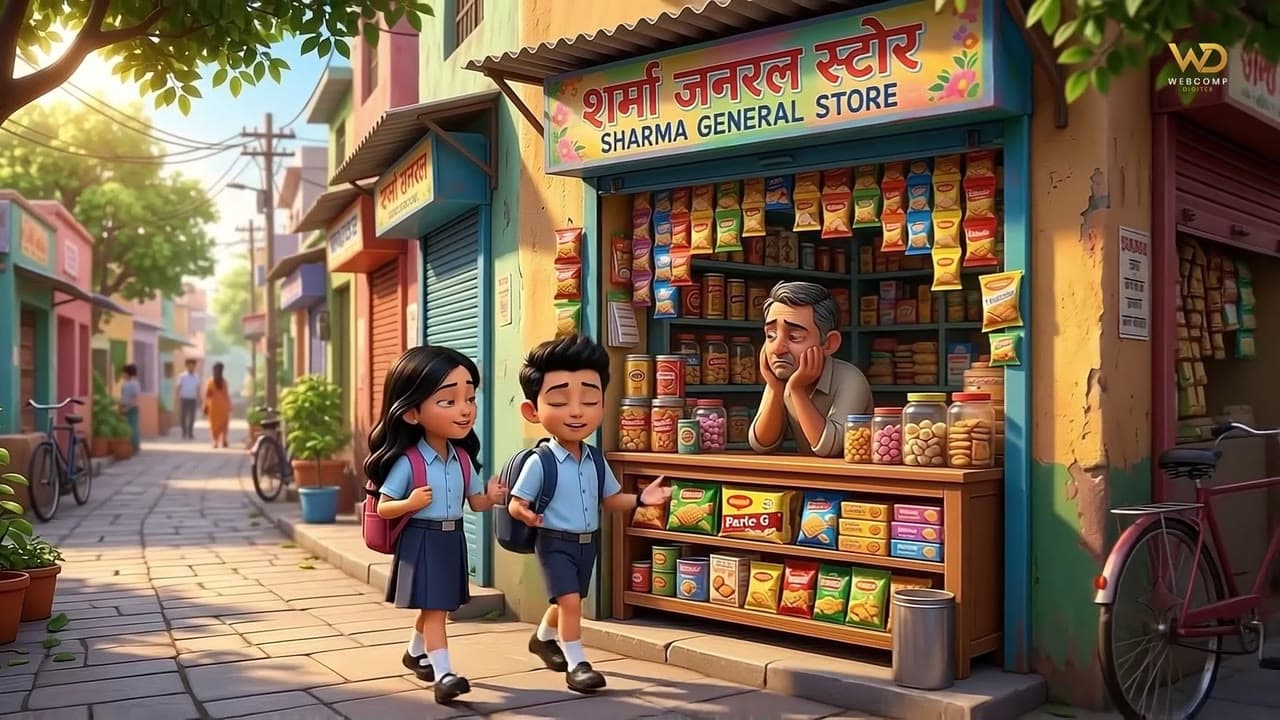
AI Filmmaking
AI-generated variant pack
One core message, cut into platform-specific variants by the AI pipeline.
AI Filmmaking
AI voiceover campaign
AI-assisted voiceover and pacing, finished with a human edit pass.
AI Filmmaking
Remote client AI film
Delivered fully remotely, no crew travel required.
FAQ
Questions before you get started.
No — AI-assisted filmmaking runs the same way regardless of which Indian city the brand is in, since the pipeline doesn't need a crew on location the way the studio's separate video production service does. Briefs, reviews and revisions happen over calls and a shared review link.
Yes, when it's scoped upfront — Tamil, Telugu, Marathi, Bengali, Kannada and other regional variants can be generated from the same core footage rather than requiring a separate shoot or a delayed dub for each market.
That's exactly the kind of compressed timeline the pipeline is built for — because a new cut or variant doesn't need a shoot re-booked, festival-specific versions can go from brief to delivery inside a short window instead of missing it.
Yes, if that's useful — brand teams anywhere in India can sit in on a session at our Pimple Saudagar studio since there's no international travel involved, though most projects run entirely over calls and a shared review link without anyone needing to be in the room.
No. A single Diwali film costs one thing; the same film redone as Hindi, Tamil, Telugu and Marathi cuts for a national festival push costs another, because each language variant carries its own generation and retry work, not just a swapped subtitle track. We quote once we know how many languages and markets a brief actually needs — not off one flat per-minute number.
Because every regional-language variant runs through its own paid, metered calls to a model like Kling or Seedance — swapping Hindi for Tamil isn't a free relabel, it's a fresh voice and timing pass that can take several attempts to land clean. During a festival window like Ganesh Chaturthi, when there's no time to wait out a bad take, that retry cost is what actually moves the price, not our margin.
Next step
Ready to book a date?
Tell us the dates and what you need shot — we'll come back with availability and next steps within one business day.
See the fuller service breakdown on our AI filmmaking page.